Ask anyone to picture an Italian lake, and chances are they'll describe Lake Como: steep green mountains, villas with their feet in the water, a boat gliding toward Bellagio. It's a beautiful image, and a true one. But it's not the only one, and for many travelers it isn't the right one.
A little to the east lies Lake Garda, Italy's largest lake: longer, broader and sunnier, with a western shore that has quietly kept its elegance while the rest of the world looked elsewhere. Choosing between the two isn't about which is more beautiful. It's about what kind of days you want to have.
Two lakes, two temperaments
Lake Como is dramatic and intimate. Its narrow arms are framed by mountains that rise straight from the water, and its famous villages, Bellagio, Varenna and Tremezzo, sit close together, linked by ferries. The mood is romantic, a little theatrical, and very much shaped by its fame.
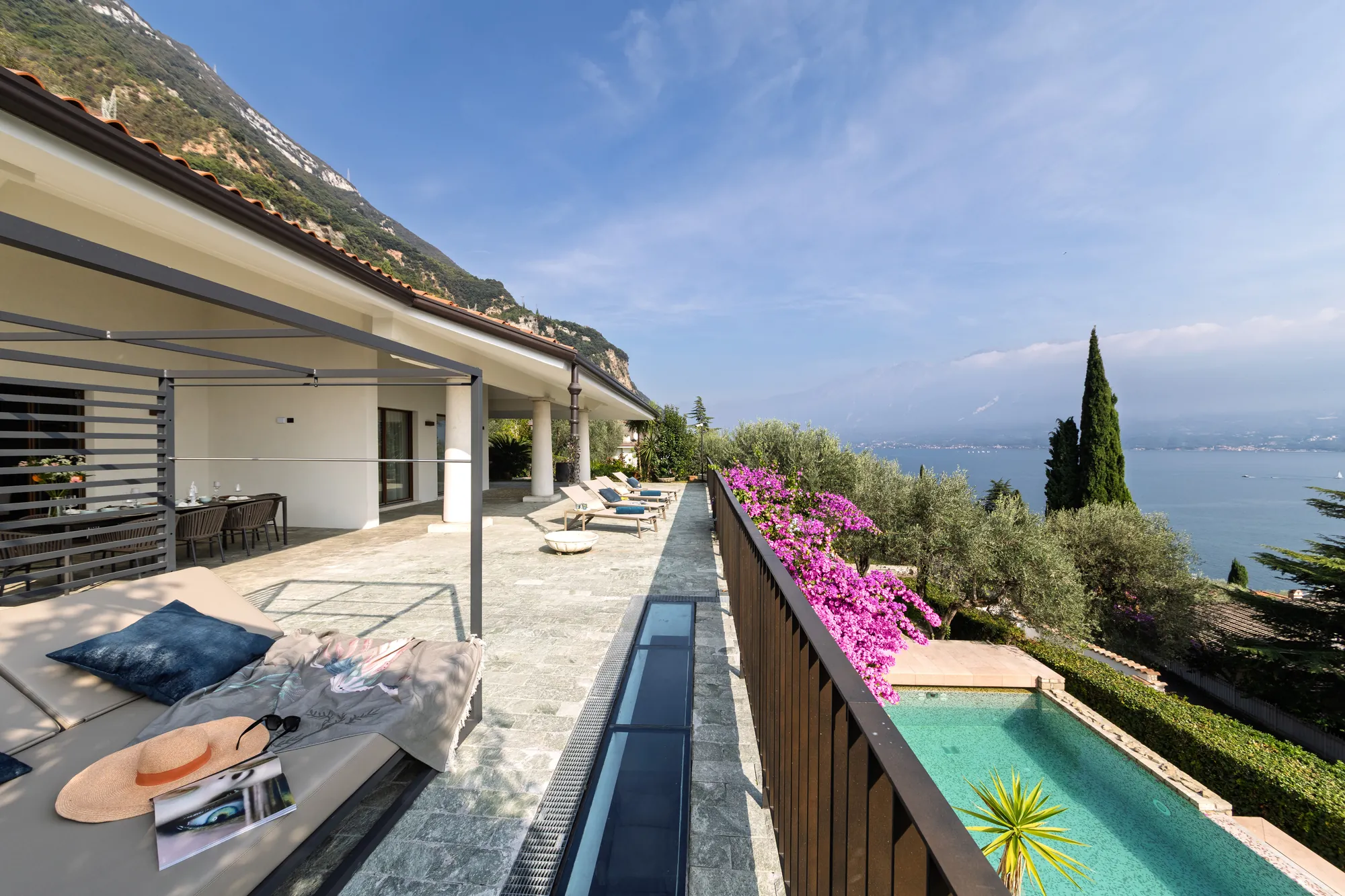
Lake Garda is wider and more varied. In the north, it feels almost like a fjord, with cliffs and Alpine peaks. In the south, it opens up into soft hills, vineyards and long views. Between the two, the western shore around Gargnano has olive groves, lemon houses, historic villas and a pace that rarely hurries.
Crowds and pace
Lake Como's popularity is both its charm and its challenge. In summer, the most famous villages can feel busy, ferries fill up, and the best-known villas and restaurants book out early.
Lake Garda welcomes many visitors too, but they gather mainly in the south, around Sirmione, Desenzano and the theme parks, and in the north around Riva del Garda, a magnet for sailors and windsurfers. The western shore between Salò and Limone is different: smaller villages, fewer tour buses, and an atmosphere that feels lived-in rather than staged. If your idea of luxury is space and quiet, this matters.
Climate and light
Garda's size gives it a milder, almost Mediterranean microclimate. Olive trees, cypresses, oleander and even lemons grow along its shores, and the lake was once Europe's northernmost lemon-growing region. Days tend to be bright, and the light over the water in the late afternoon is something guests remember.
Lake Como, enclosed by steeper mountains, is a little cooler and greener, with more shade on its shores. Both lakes are lovely from spring to autumn; Garda simply leans more toward the south.
Getting there
Lake Como is closer to Milan, around an hour from the city. That makes it an easy add-on to a Milan stay.
Lake Garda sits between Milan and Venice, which makes it a natural base for a longer Northern Italy trip. Verona airport is about an hour and a quarter from Gargnano by car, Milan Bergamo about an hour and a half. Verona itself, Venice and the vineyards of Valpolicella and Franciacorta are all within reach for day trips.
At the table
Both lakes cook with what the water and the hills provide: lake fish, risotto, olive oil and local cheeses. Garda adds its own signatures, including a delicate DOP olive oil and wines from every shore: Lugana from the south, Bardolino from the east, and the pale rosé known as Chiaretto from the Valtènesi hills on the west. The western shore also has a remarkable concentration of acclaimed restaurants for its size.
Which lake is for you?
Choose Lake Como if you want the iconic postcard, a short stay close to Milan, and you don't mind sharing it.
Choose Lake Garda, and especially its western shore, if you want more space, more sun and more variety: a slower stay where the days organize themselves around a long lunch, a swim and the evening light on the water.
← All journal entries